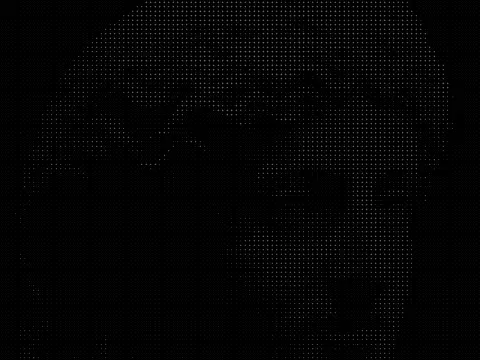
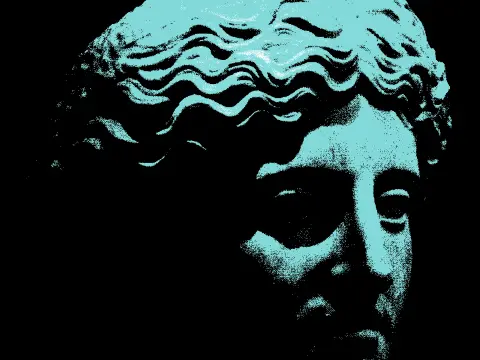
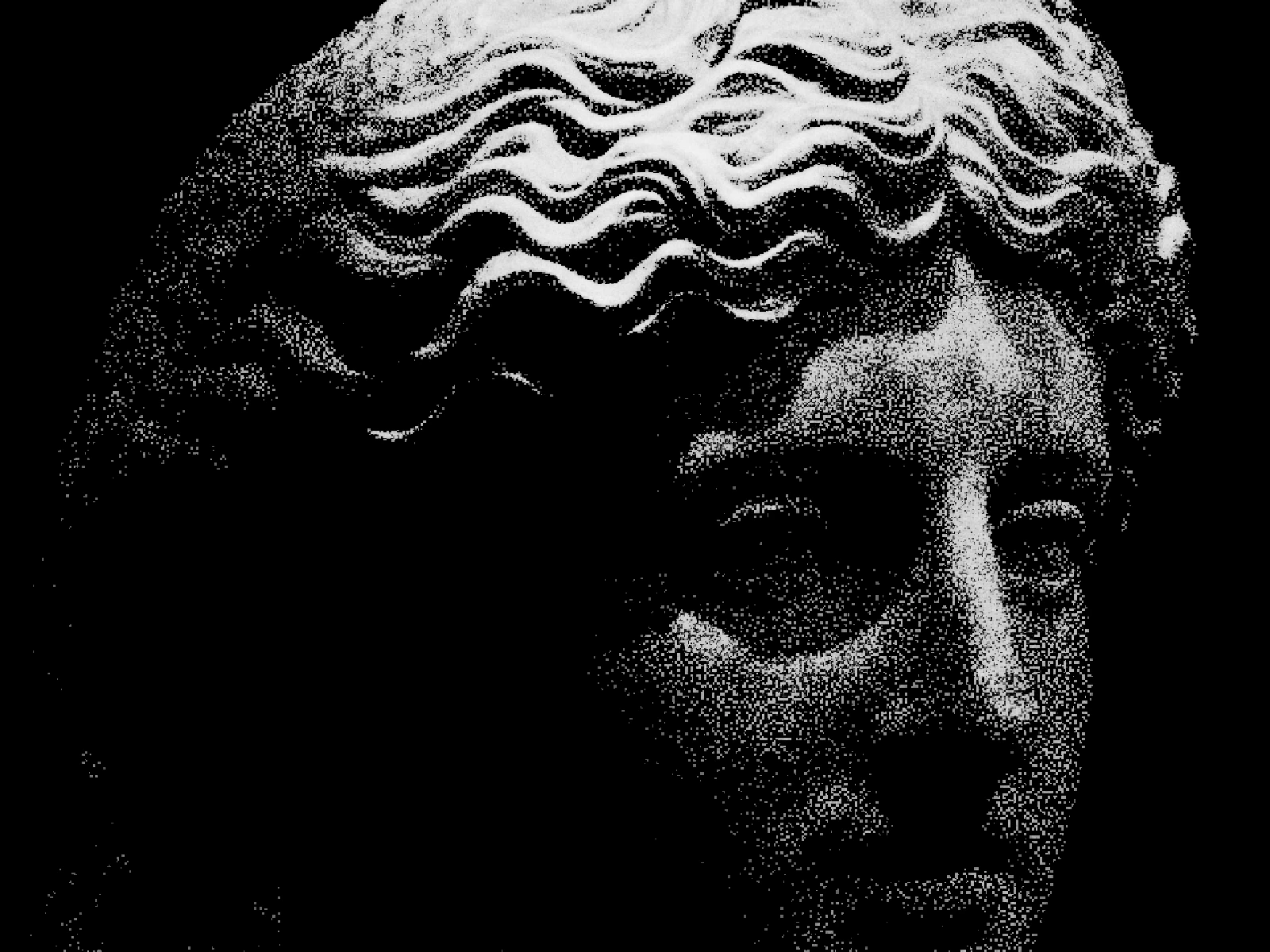
mezzotint effect
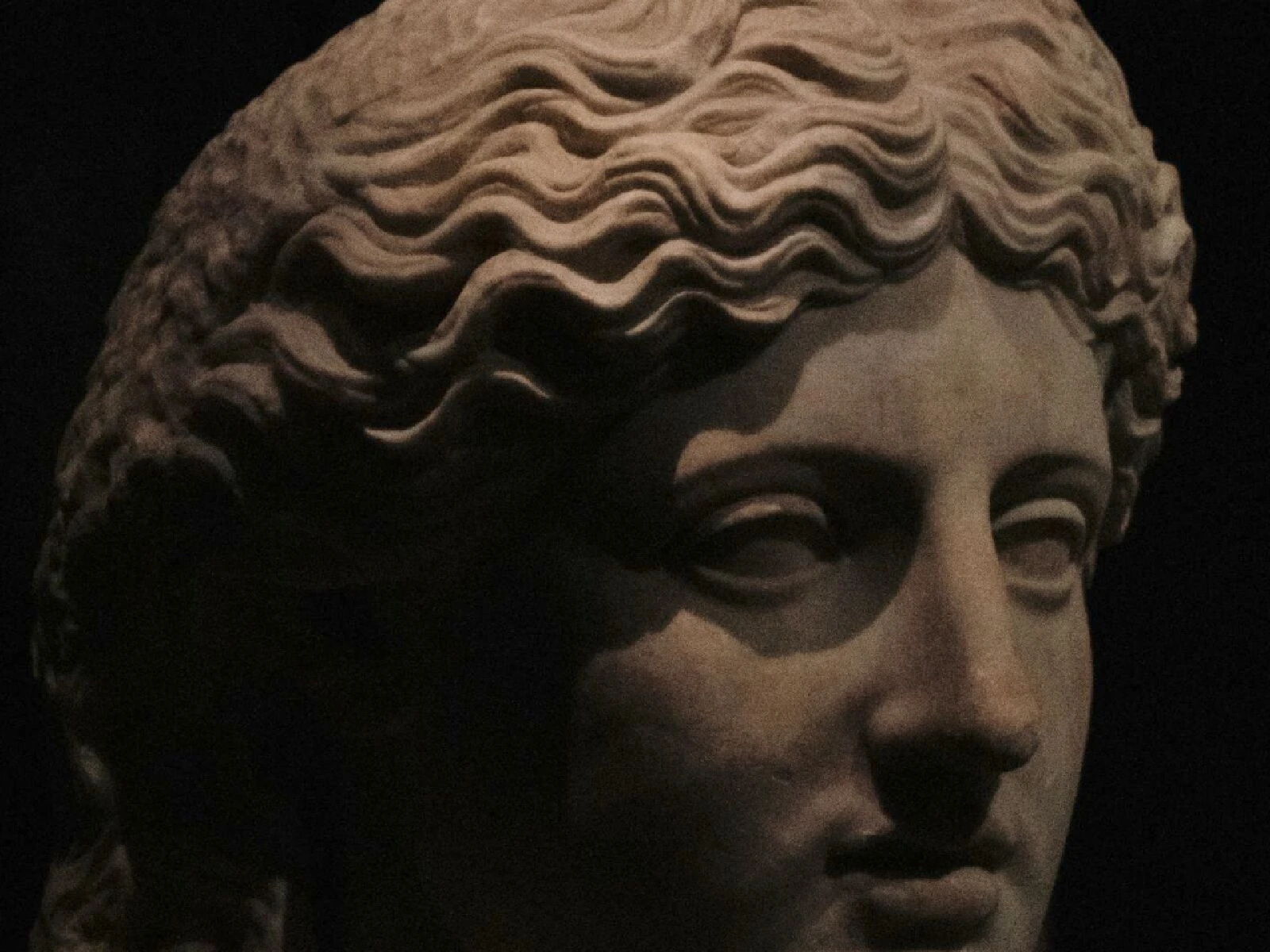
 SourceEffect
01/ ORIGIN
Mezzotint was invented in the seventeenth century and works in reverse: the plate is roughened all over so it prints solid black, and the engraver then burnishes areas smooth to release less ink and let light back in. It was the only intaglio process that could reproduce deep continuous shadow, which made it the preferred method for reproducing oil portraits for two centuries. Working from dark to light is a discipline almost nothing else demands.
02/ SWEEP
GRAIN sweep
03/ SPEC
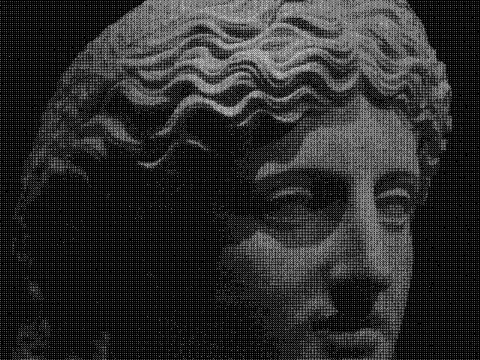
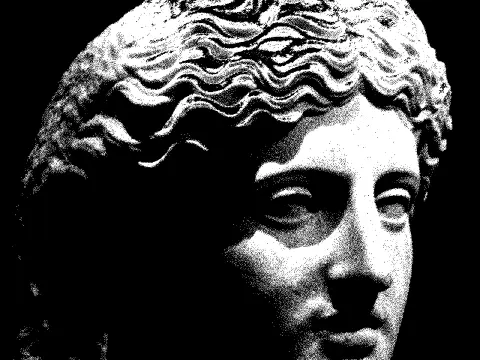
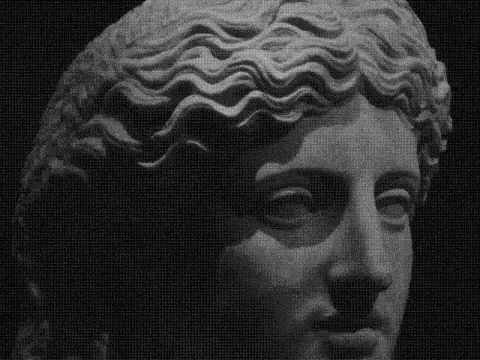
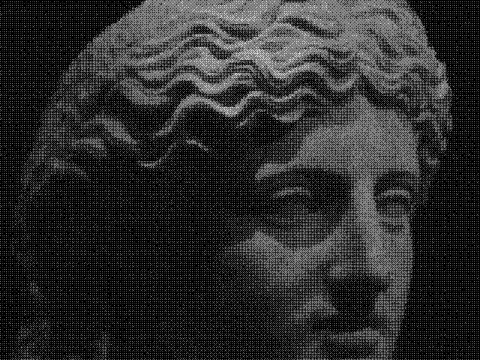
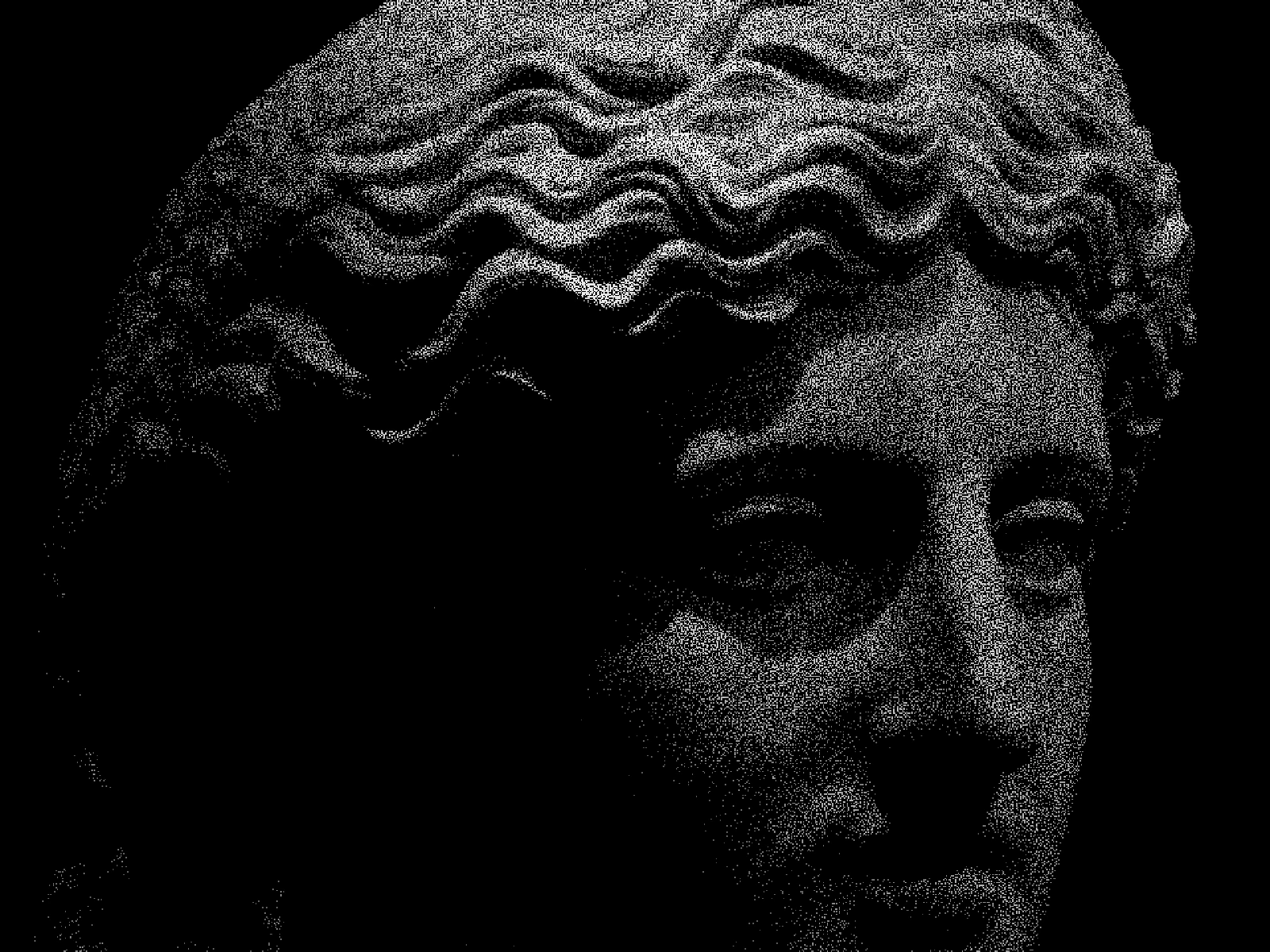
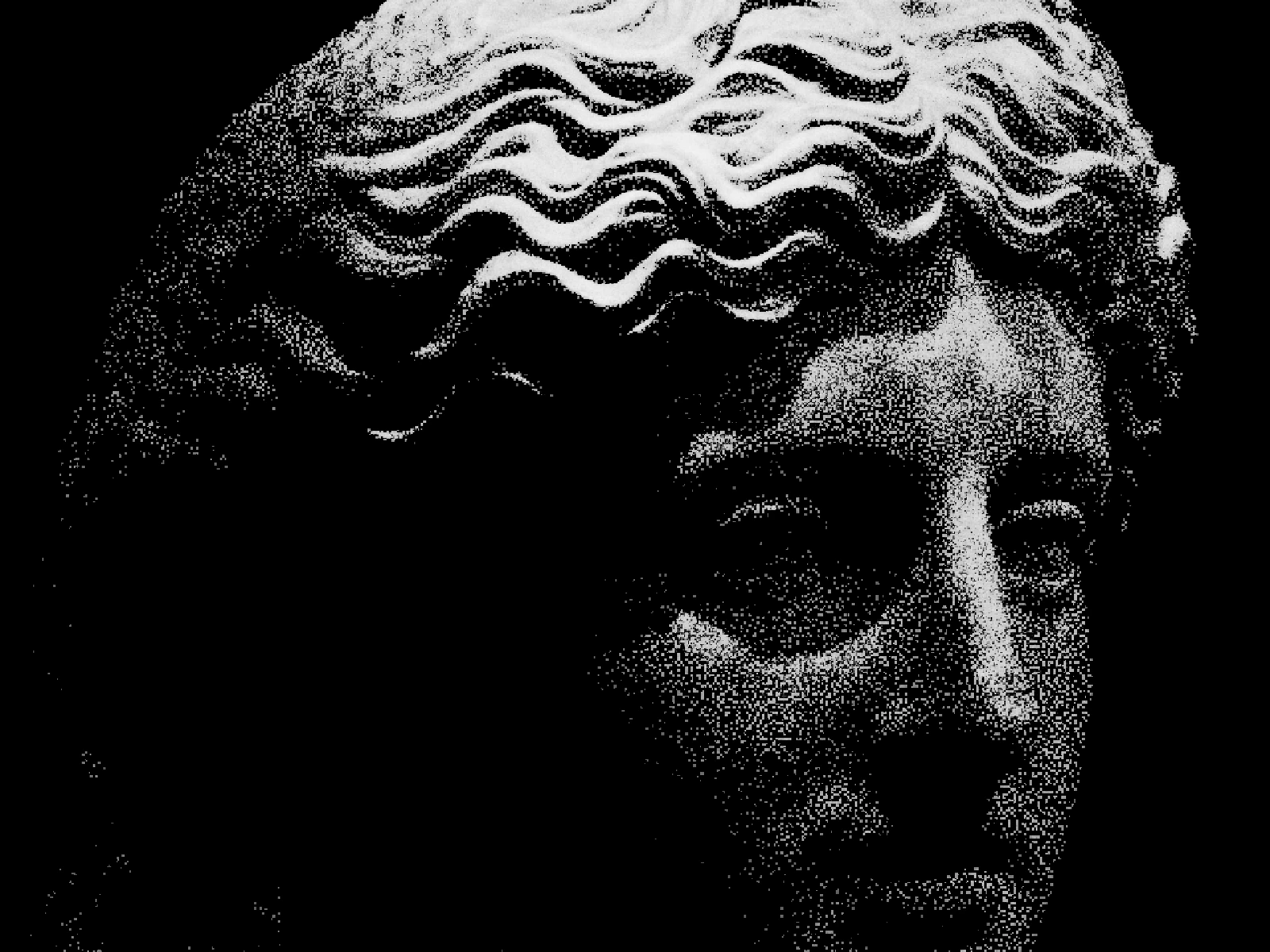
This effect renders tone as an irregular roughened grain rather than a regular screen, imitating a burnished intaglio plate where ink sits in a randomised surface rather than in a grid. GRAIN sets the cell size from 1 to 10 pixels with a default of 2, and is the control that decides whether the result reads as a fine mezzotint plate or as coarse aquatint. THRESHOLD shifts the black and white balance, and GAMMA bends the tonal response, which matters here because the process is weighted toward the shadows. In kott the grain is generated per pixel, so it never tiles across a large export.
04/ FAQ
- What is a mezzotint effect?
- A mezzotint effect builds tone from an irregular roughened grain rather than a regular dot screen, imitating an intaglio plate worked from solid black toward light.
- What is the difference between mezzotint and halftone?
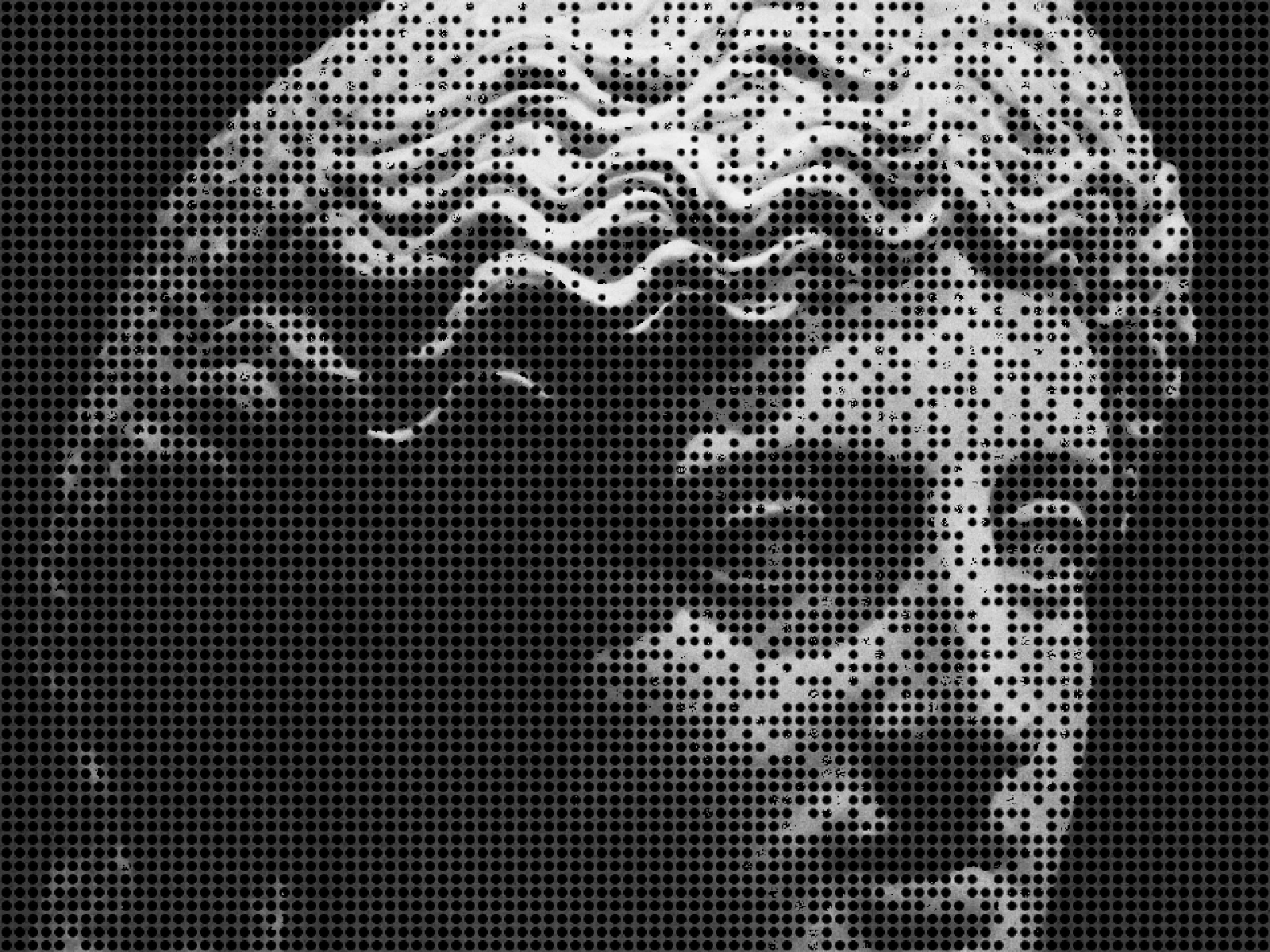
- A halftone uses a regular rotated grid of dots that vary in size. Mezzotint uses an irregular random grain, so it has no visible pattern and holds shadow detail far better.
- Why does mezzotint suit dark images?
- The process was built to work from black toward light, so it carries deep shadow with more separation than a screen does. GAMMA lets you shift where that shadow detail falls.