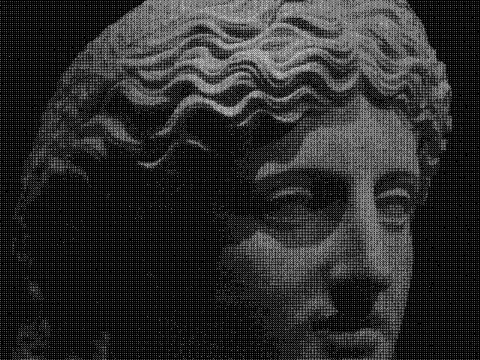
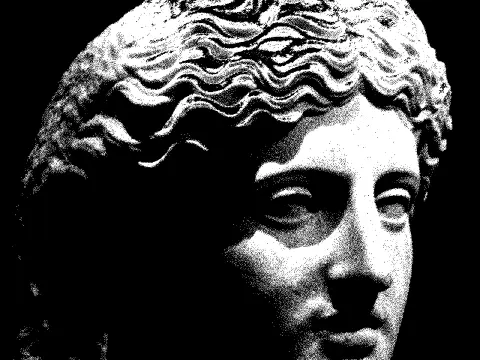
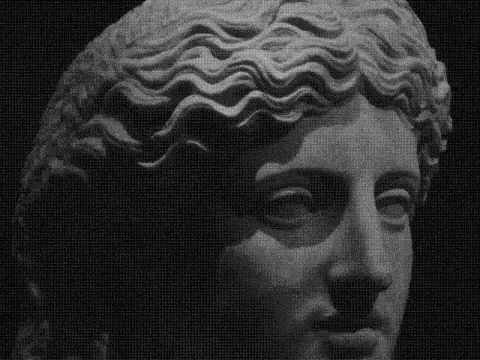
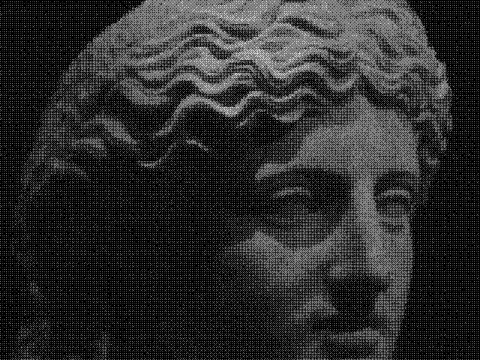
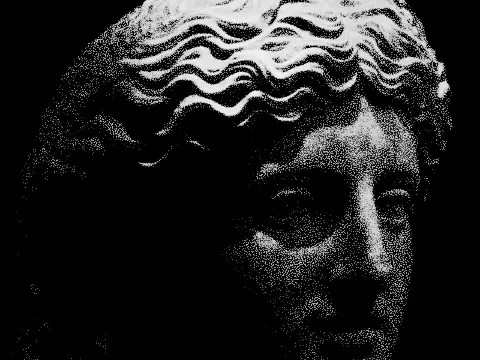
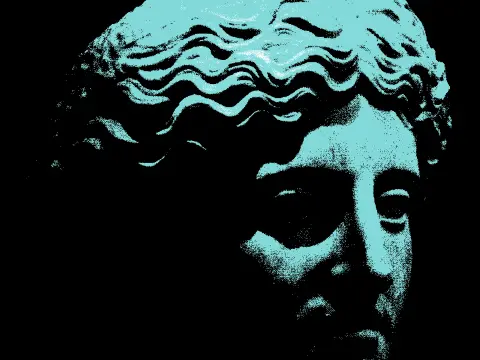
star dither effect
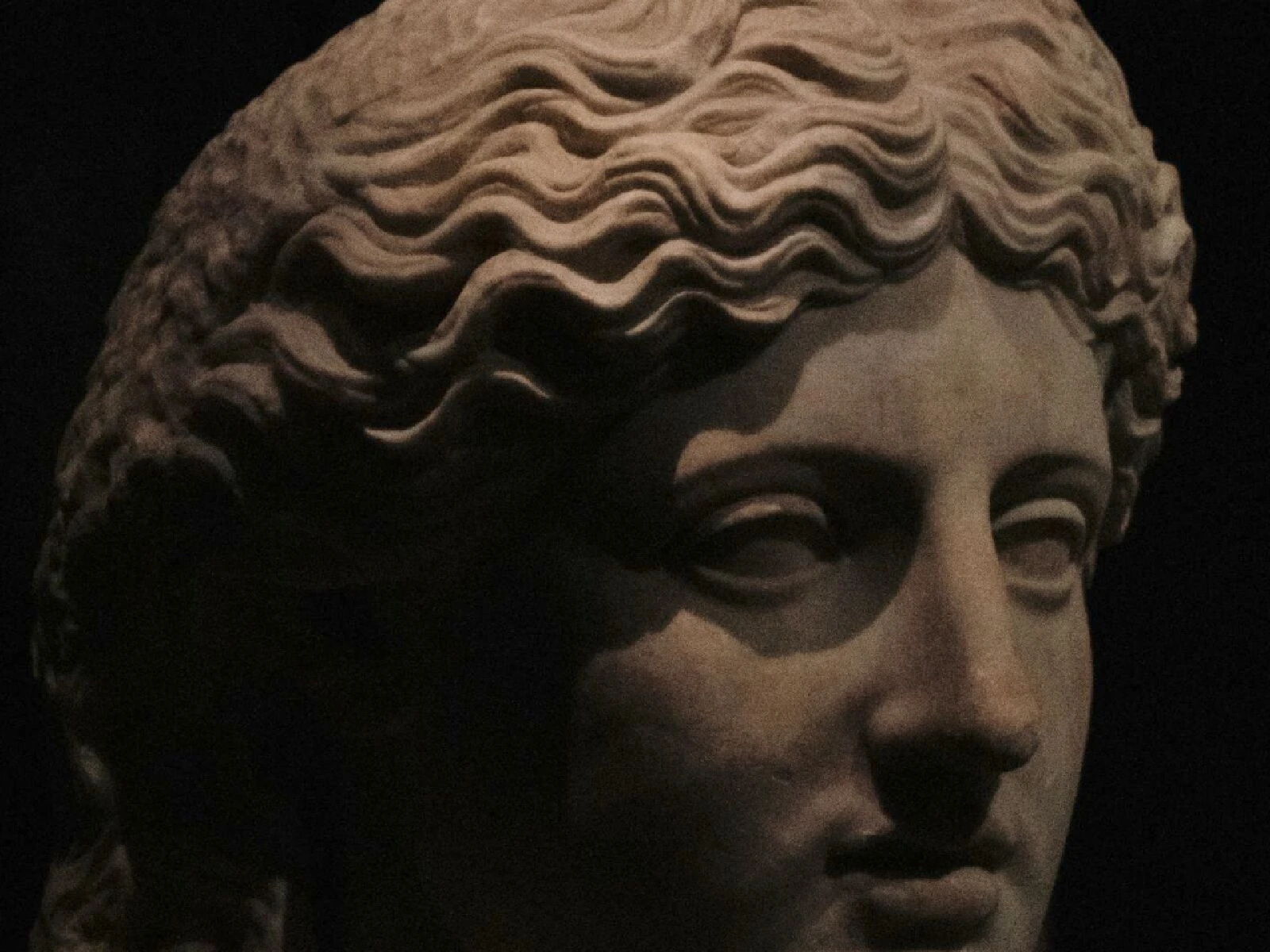
 SourceEffect
01/ ORIGIN
Ordered dithering does not require any particular cell shape. The threshold matrix can be built around whatever form you like, and printers exploited that for decades with novelty screens: linen textures, mezzotint grains, concentric circles and stars, all sold as ways to make a halftone look less like a halftone. The mathematics is indifferent. Only the eye notices, and the eye notices immediately.
02/ SWEEP
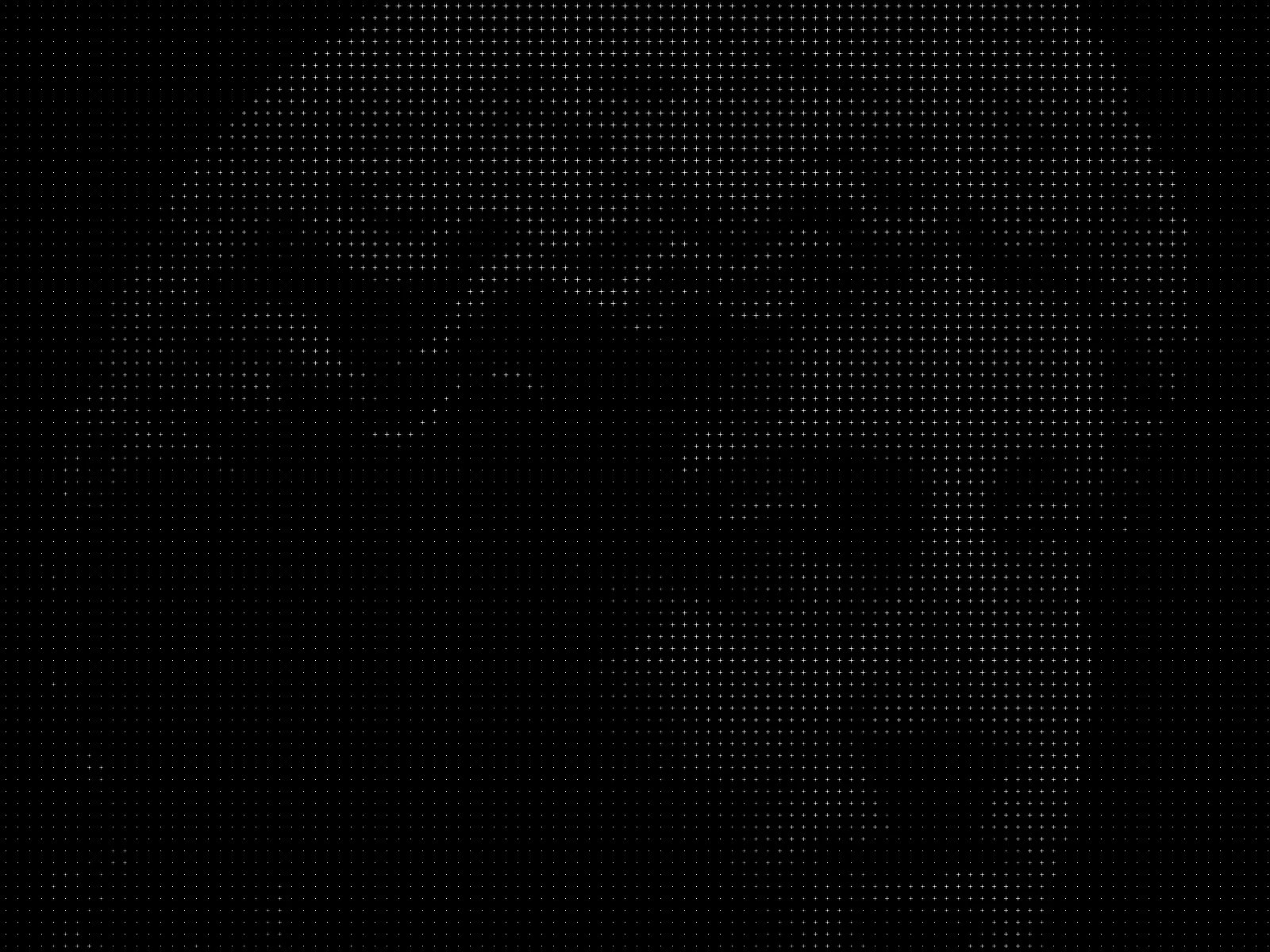
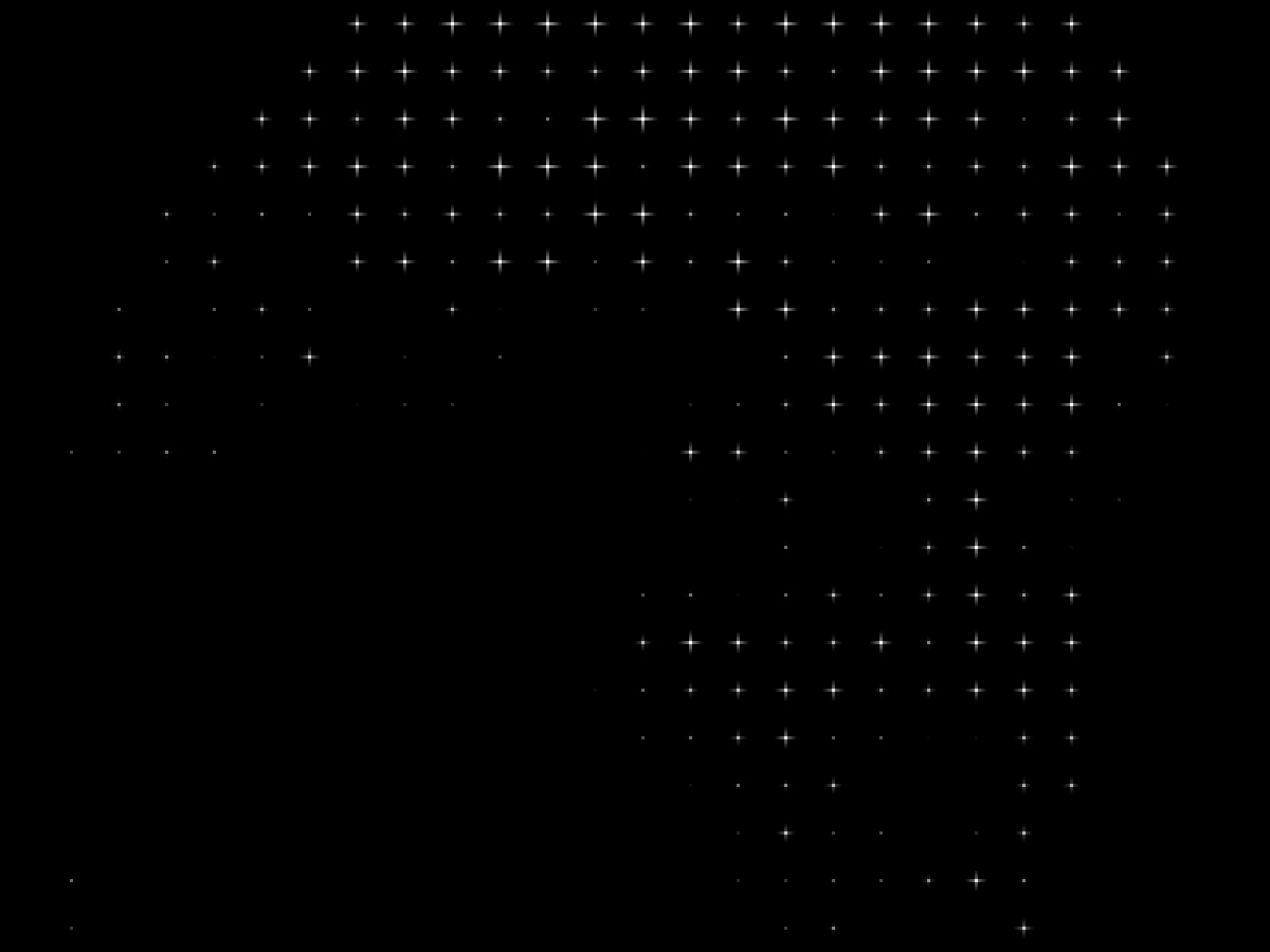
PIXEL sweep

03/ SPEC
This effect thresholds the image against an ordered pattern whose cell is star-shaped, so quantisation boundaries follow that form rather than a round dot. PIXEL runs from 1 to 12 pixels with a default of 3 and scales the cell, which controls whether the stars read as texture or as a visible motif. THRESHOLD shifts the black and white balance, and CONTRAST is an advanced control. Because the cell shape survives at any scale, in kott the motif stays recognisable even where tone is dense.
04/ FAQ
- What is a star dither effect?
- It thresholds an image against an ordered dither pattern built on a star-shaped cell, so quantisation follows that motif rather than a round dot.
- Does the dither cell shape affect quality?
- Not mathematically. Ordered dithering works with any cell shape, which is why printers sold novelty screens in linen, mezzotint and star patterns for decades. Only the appearance changes.
- What PIXEL size keeps the stars visible?
- Three or above. Below that the cells are too small for the shape to register and the result reads as ordinary grain, which defeats the point of choosing it.